Mission-grounded motivation
Service, responsibility, repetitive work, limited recognition, and a realistic understanding of the assignment beyond equipment or identity.
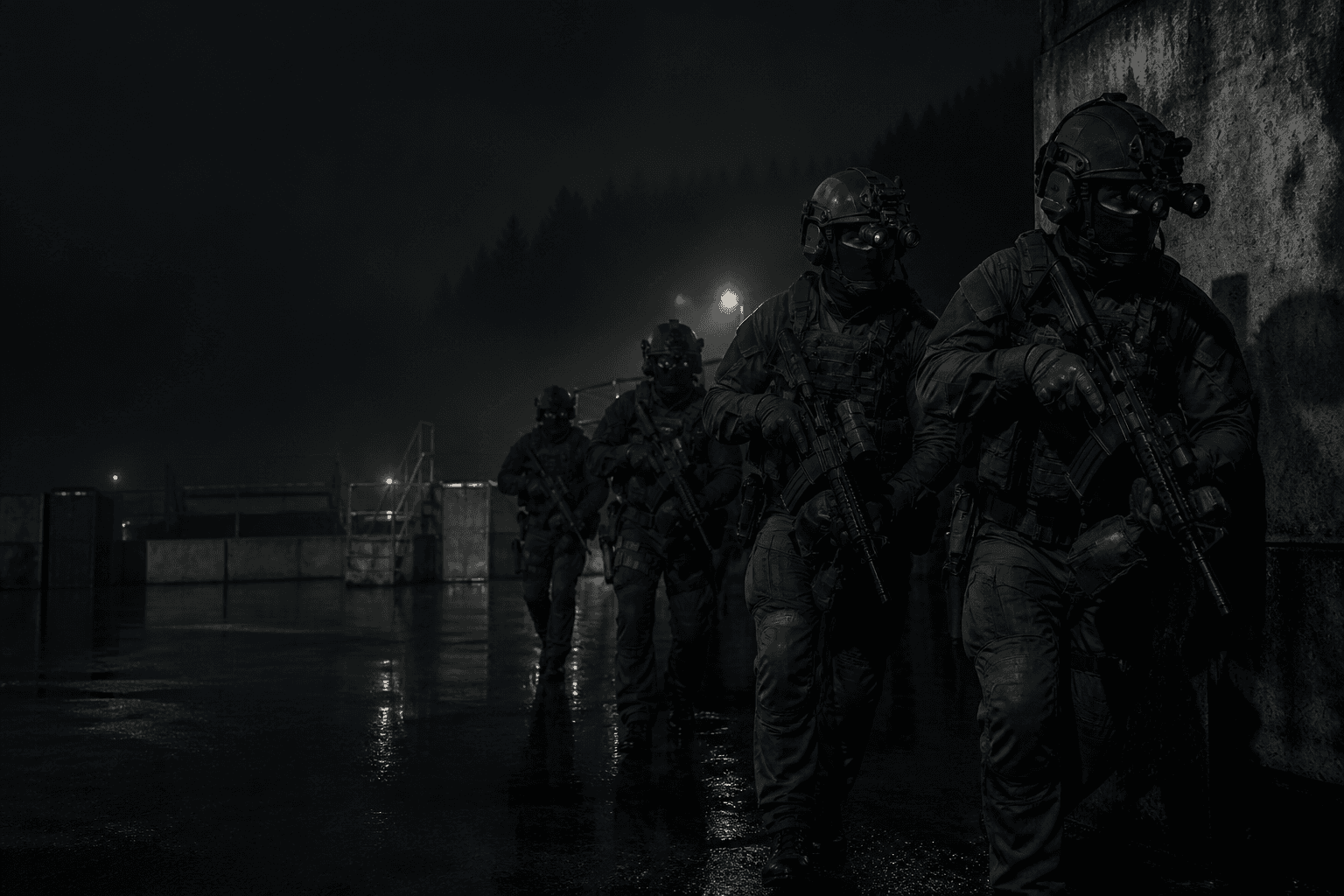
SWAT interview practice
Practice with your package
Oral boards use scored-question allowances. Detective and Sergeant exercise reviews use AI preparation requests; live witness interviews, employee role-plays and briefing capture use voice minutes. Invited testers can continue using their assigned access codes.
View packages and included practice →Physical preparation · Beta
Upload or enter your test, add current results and available training days, then build a structured preparation program. Track sessions, adjust upcoming work, and keep it in your candidate account. Specialized events require qualified coaching.
Build my physical preparation program →Fair-access protocol
Each tester’s first session draws from the same reviewed five-question benchmark. Candidates may choose one to six questions; a six-question session adds one question from the rotating pool.
After the first session, every invited tester can use the same balanced rotation drawn from a large SWAT-specific question pool without repeats until the remaining pool is exhausted.
No actual agency questions, assessor notes, restricted tactics, or nonpublic unit information.
Completed oral-board progress summaries and reduced written coaching reports are saved to the private candidate account so they can be viewed on another device after sign-in. Account copies do not include answer audio or full transcripts. Enter Prepared does not provide scores or rankings to selection staff.
Live selection board
Selection evidence map
Service, responsibility, repetitive work, limited recognition, and a realistic understanding of the assignment beyond equipment or identity.
Reliable execution, disciplined communication, support for other members, appropriate dissent, humility, and comfort contributing from a subordinate role.
Separating urgency from impatience, identifying missing information, choosing proportionate safeguards, and reassessing as risk changes.
Objective standards, deliberate repetition, receptiveness to coaching, honest recognition of limits, remediation, and sustained competency after selection.
Speaking up about risk, reporting errors accurately, resisting team secrecy, preserving accountability, and protecting trust through candor.
Concise material information, confirmation of critical details, shared awareness, controlled communication under pressure, and productive debriefing.
Sustainable physical preparation, recovery, recognition of impairment, appropriate use of resources, and reliability across demanding schedules.
Current authorized standards, reviewable decisions, professional public interaction, accurate documentation, and respect for command and agency authority.
Candidate preparation system
List every confirmed component, standard, date, allowed resource, scoring condition, and unresolved question. Separate official facts from station talk.
Index releasable selection guidance, unit and agency policies candidates are authorized to review, fitness and range standards, training expectations, mission, command structure, and current legal updates.
Capture current oral-board, physical, and range performance under the published conditions. Record facts without excuses or unsafe max-effort repetition.
Prepare examples of teamwork, followership, failure, correction, judgment, restraint, integrity, sustained preparation, and speaking up about safety.
Mark each domain strong, thin, or missing. Assign one lawful development action, qualified coach, and observable measure to every thin area.
Work backward from the official job-related standard with qualified guidance, recovery, and injury safeguards. Track consistency and trends—not only best scores.
Confirm the authorized course and equipment rules, use qualified instruction, prioritize safety and reliable fundamentals, and document performance patterns without reproducing restricted content.
Perform a fresh question, reconstruct only what you actually said, repair one weakness, then transfer the improvement to a different prompt within 48 hours.
Ask trusted, authorized mentors about reliability, listening, ego, preparation habits, communication, and response to correction—not for inside questions or selection influence.
Rehearse decision structure after an appropriate, safe training stressor while protecting technique and recovery. Do not invent hazardous tactical simulations.
Use the announced sequence, equipment, timing, travel assumptions, and recovery windows. Debrief decisions and omissions after the full session.
Reduce avoidable fatigue, confirm equipment and travel, normalize meals and hydration, preserve sleep, and stop chasing last-minute fitness gains.
Application packet preparation
A letter of interest, résumé, qualifications packet, or supporting documents may become the panel’s first evidence of your preparation. Build the submission for the SWAT Officer process your agency actually announced—not a generic template.
Capture every required document, prompt, page limit, format, signature, routing step, and deadline before drafting.
Match each stated duty or qualification to specific experience, training, results, and lessons you can honestly support.
Explain why this role, why you are ready, what evidence supports the claim, and what contribution you intend to make.
Check completeness, accuracy, tone, file names, attachments, readability, and compliance against the official instructions.
Qualifications coverage check
Current instructions control. Never fabricate experience, alter credentials, include confidential case information, or upload restricted agency material. Use authorized, de-identified facts and preserve your own voice.
Whole-process preparation
Study authorized mission, selection rules, policy, team expectations, legal guidance, command relationships, and candidate-accessible standards.
Open source-study framework →02Build progressively from the official job-related standard, with qualified guidance, objective tracking, recovery, and injury safeguards.
Open physical-preparation guide →03Confirm the authorized course and equipment rules. Reduce variables through safe, qualified, fundamentals-based preparation.
Open range-preparation guide →04Protect sleep, normal nutrition, hydration, travel, equipment, and the taper instead of trying to gain fitness at the last minute.
Open test-week guide →Local knowledge boundary
Use only material every eligible candidate is authorized to review.
Record source owner, effective date, superseded guidance, and unresolved conflicts.
For each rule, identify the trigger, purpose, required action, discretion, notification, documentation, and verification.
Never enter team capabilities, tactical procedures, active-case information, or nonpublic vulnerabilities into the practice room.
Public standards foundation
The preparation structure reflects public guidance emphasizing reasonable job-related selection, physical readiness, sustained competency, written personnel standards, training, command relationships, review, and accountability. Your agency’s official process always controls.
Included with paid plans